
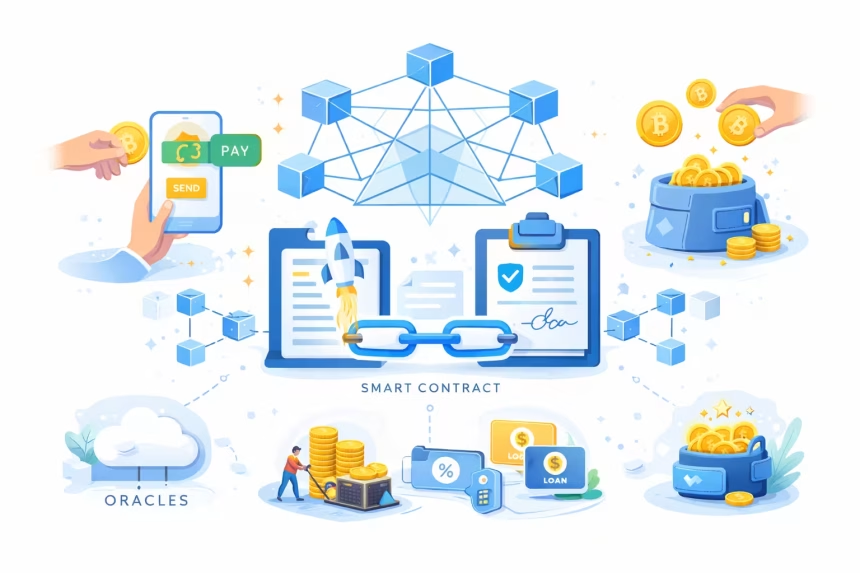
Smart contracts are self-executing digital agreements that automatically run when predefined conditions are met. They operate on blockchain networks and remove the need for intermediaries like banks, lawyers, or brokers.
In simple words:
Smart contracts are “if-this-then-that” programs that automatically execute transactions on the blockchain.
Why Are Smart Contracts Important?
Traditional contracts rely on trust, paperwork, and third parties. Smart contracts replace this with code, automation, and transparency.
Key Benefits:
- No middlemen
- Faster execution
- Lower costs
- Tamper-proof logic
- Global accessibility
How Smart Contracts Work (Step-by-Step)
Let’s break it down with a simple flow:
- Contract terms are written as code
- The contract is deployed on a blockchain
- Conditions are monitored automatically
- Once conditions are met → execution happens instantly
✔ No human approval required
✔ No delays or manipulation
Simple Example of a Smart Contract
Example: Online Payment
Condition:
“If payment is received, release the digital product.”
Result:
Once payment is confirmed on the blockchain, the product is delivered automatically.
No seller approval. No disputes.
Real-World Smart Contract Example (DeFi)
Example: Crypto Lending
- User deposits crypto as collateral
- Smart contract releases loan
- Interest accrues automatically
- Loan is repaid → collateral returned
If loan is not repaid, collateral is liquidated automatically. This is how DeFi platforms work without banks.
What Blockchains Support Smart Contracts?
Not all blockchains support smart contracts.
Popular Smart Contract Platforms:
- Ethereum – Most widely used
- BNB Chain
- Polygon
- Solana
- Avalanche
Ethereum is the foundation of most DeFi and NFT platforms.
Smart Contracts in DeFi (Decentralized Finance)
Smart contracts power almost every DeFi application.
DeFi Use Cases:
- Lending & borrowing
- Decentralized exchanges (DEXs)
- Yield farming
- Stablecoins
- Staking rewards
All actions happen automatically through code.
Smart Contracts vs Traditional Contracts
| Feature | Smart Contracts | Traditional Contracts |
| Execution | Automatic | Manual |
| Intermediaries | None | Required |
| Speed | Instant | Slow |
| Cost | Low | High |
| Transparency | Public | Private |
Advantages of Smart Contracts
✔ Trustless execution
✔ No intermediaries
✔ Lower transaction costs
✔ High security
✔ Global and permissionless
Limitations of Smart Contracts
❌ Bugs in code can be exploited
❌ Cannot be changed once deployed
❌ Depend on correct input data
❌ Legal recognition varies
⚠️ Audits are crucial for safety.
Are Smart Contracts Secure?
Smart contracts are secure if written correctly. However:
- Bugs can lead to hacks
- Poor audits increase risk
That’s why reputable DeFi projects undergo multiple security audits.
Smart Contracts and NFTs
NFT ownership and transfers are controlled by smart contracts.
They ensure:
- Authenticity
- Ownership proof
- Royalty distribution
Future of Smart Contracts
Smart contracts are evolving rapidly and are expected to:
- Integrate with real-world data (oracles)
- Automate business processes
- Power Web3 applications
- Transform finance, gaming, insurance, and supply chains
Frequently Asked Questions (FAQs)
Are smart contracts legal?
Legal recognition depends on jurisdiction. Some countries recognize them; others are still evolving laws.
Can smart contracts be changed?
No. Once deployed, smart contracts cannot be altered unless designed with upgrade features.
Do smart contracts cost money?
Yes. Executing smart contracts requires gas fees paid in cryptocurrency.
Final Thoughts
Smart contracts are the backbone of DeFi, NFTs, and Web3. By automating trust through code, they eliminate intermediaries and unlock a new digital economy that is transparent, efficient, and global.
Understanding smart contracts is essential to understanding the future of blockchain technology.
Disclaimer
Disclaimer:
This content is for educational purposes only and does not constitute financial or legal advice. Smart contracts and DeFi involve risk. Always do your own research (DYOR) and consult professionals where required.