
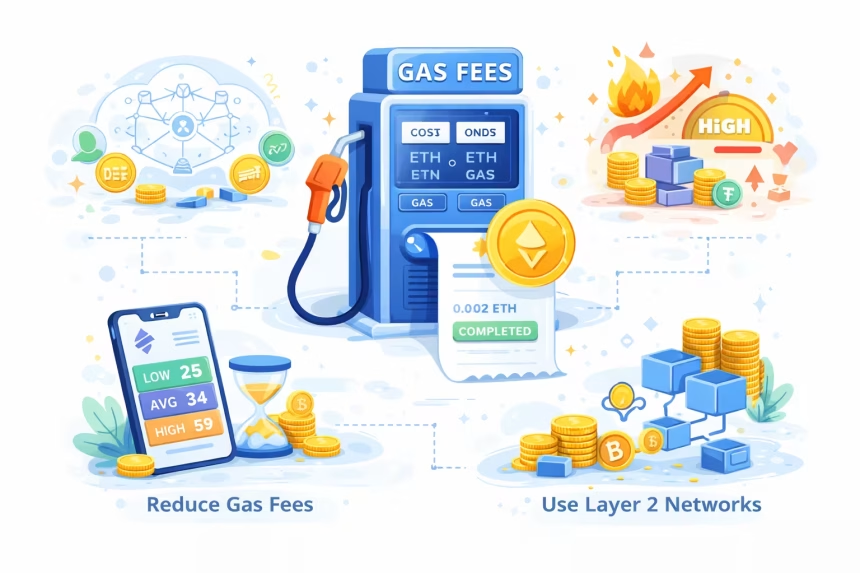
Gas fees are the transaction fees paid to process and validate transactions on a blockchain network. They compensate network validators or miners for the computing power required to execute transactions and smart contracts.
In simple words:
Gas fees are the cost you pay to use a blockchain.
Without gas fees, blockchains would be vulnerable to spam and network abuse.
Why Are Gas Fees Important?
Gas fees ensure:
- Network security
- Transaction prioritization
- Fair resource allocation
- Incentives for validators
They play a critical role in DeFi, NFTs, DEXs, and smart contracts.
How Gas Fees Work (Simple Explanation)
Each blockchain operation requires a certain amount of computational effort.
Example:
- Sending crypto → Low gas
- Swapping tokens on a DEX → Medium gas
- Minting an NFT → High gas
You pay gas fees in the native blockchain currency (e.g., ETH on Ethereum).
Gas Fees Explained With a Real Example
Example: Ethereum Transaction
- You send ETH to a friend
- Transaction is broadcast to the network
- Validators prioritize transactions with higher gas fees
- Once confirmed, gas fee is deducted from your wallet
✔ Transaction complete
✔ Fee paid to validators
Why Do Gas Fees Fluctuate?
Gas fees change based on network demand.
Main Reasons for High Gas Fees:
- Network congestion
- Popular DeFi activity
- NFT mints
- Market volatility
More users competing = higher fees.
Gas Fees in DeFi and DEXs
DeFi platforms rely heavily on smart contracts.
Actions like:
- Swapping tokens
- Adding liquidity
- Staking
- Yield farming
all require gas fees.
Complex contracts = higher gas cost.
Gas Fees on Different Blockchains
Not all blockchains have the same gas fee structure.
| Blockchain | Gas Fees | Speed |
| Ethereum | High | Medium |
| BNB Chain | Low | Fast |
| Polygon | Very Low | Fast |
| Solana | Very Low | Very Fast |
Gas Limit vs Gas Price (Important Difference)
Gas Limit
- Maximum gas units you are willing to use
- Prevents excessive fee spending
Gas Price
- Price per gas unit
- Determines transaction speed
Total Gas Fee = Gas Limit × Gas Price
What Happens If Gas Fee Is Too Low?
- Transaction stays pending
- May fail or get dropped
- Still may cost partial gas
Always choose a reasonable gas fee.
How to Reduce Gas Fees in Crypto
1. Use Layer 2 Networks
Layer 2 solutions reduce congestion.
Examples:
- Arbitrum
- Optimism
- Polygon
2. Transact During Low Network Activity
Gas fees are lower during off-peak hours.
3. Avoid Peak NFT & DeFi Times
Popular launches cause gas spikes.
4. Use Gas Trackers
Check gas prices before transacting.
5. Batch Transactions
Some wallets and platforms allow batching.
Gas Fees and Scalability
High gas fees highlight scalability issues.
Blockchain upgrades aim to:
- Increase throughput
- Reduce fees
- Improve efficiency
Ethereum upgrades focus heavily on this.
Gas Fees vs Transaction Fees (Traditional Finance)
| Feature | Gas Fees | Bank Fees |
| Transparency | High | Low |
| Speed | Fast | Slow |
| Intermediaries | None | Multiple |
| Flexibility | User-controlled | Fixed |
Are Gas Fees a Problem?
Gas fees are not a flaw they are a trade-off for decentralization and security.
However, improving affordability remains a major focus in blockchain development.
Frequently Asked Questions (FAQs)
Are gas fees refundable?
No. Once paid, gas fees are not refundable, even if the transaction fails.
Do all cryptocurrencies have gas fees?
Most blockchains have fees, but fee models differ.
Why are Ethereum gas fees high?
Ethereum has high usage and limited block space, causing competition.
Final Thoughts
Gas fees are an essential part of how blockchains function. They keep networks secure, fair, and operational. Understanding how gas fees work—and how to reduce them—helps you transact smarter in crypto and DeFi.
Before every transaction, always check the gas cost.
Disclaimer
Disclaimer:
This article is for educational purposes only and does not constitute financial or investment advice. Cryptocurrency transactions involve risk. Always do your own research (DYOR) and follow applicable laws and regulations.