

Yield farming allows crypto investors to earn rewards by providing liquidity, lending assets, or staking tokens in decentralized finance protocols. While returns can be attractive, risks are equally important to understand.
In this guide, we explore the best yield farming platforms, compare their features, highlight pros and cons, and help you choose the right option based on your risk tolerance and experience level.
What Is Yield Farming?
Ethereum popularized yield farming through DeFi protocols that allow users to deposit tokens into liquidity pools.
Yield farming involves:
- Providing liquidity to decentralized exchanges
- Lending assets to borrowers
- Staking tokens for rewards
- Earning trading fees and governance tokens
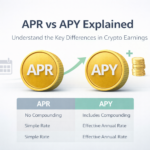
Returns are usually expressed as APY and can range from 3 percent to over 100 percent depending on risk.
1. Aave
Aave is one of the most established DeFi lending platforms.
How It Works
Users deposit assets into liquidity pools and earn interest from borrowers.
Pros
- Strong reputation
- Transparent rates
- Multi chain support
- Non custodial
Cons
- Smart contract risk
- Variable APY
- Gas fees on Ethereum
Best For
Low to moderate risk yield farming through lending.
2. Compound
Compound is another decentralized lending protocol.
Pros
- Algorithmic interest rates
- Transparent on chain data
- Well established platform
Cons
- Lower yields during low demand
- Smart contract risk
- Limited token variety compared to others
Best For
Users seeking predictable DeFi lending returns.
3. PancakeSwap
PancakeSwap operates on BNB Smart Chain and is known for high APY farming pools.
Pros
- Low transaction fees
- High yield opportunities
- Wide range of pools
Cons
- Higher risk pools
- Impermanent loss
- Reward token volatility
Best For
Users comfortable with moderate to high risk farming.
4. Uniswap
Uniswap is a leading decentralized exchange on Ethereum.
Pros
- Highly liquid pools
- Trusted platform
- Strong ecosystem
Cons
- High gas fees
- Impermanent loss risk
- No guaranteed APY
Best For
Large liquidity providers who can handle Ethereum fees.
5. Curve Finance
Curve Finance specializes in stablecoin liquidity pools.
Pros
- Lower impermanent loss for stablecoin pairs
- Efficient stablecoin swaps
- Attractive stable yields
Cons
- Complex interface
- Smart contract risk
- Yield fluctuations
Best For
Stablecoin based yield farming.
Centralized Yield Farming Alternatives
Some exchanges such as Binance also offer farming products under Earn sections.
Pros:
- Easy to use
- No wallet setup required
Cons:
- Custodial risk
- Limited transparency compared to DeFi
Risk Comparison
| Risk Type | Lending Platforms | DEX Farming | Centralized Earn |
| Smart Contract Risk | Yes | Yes | Low |
| Impermanent Loss | No | Yes | No |
| Custodial Risk | No | No | Yes |
| Gas Fees | Network dependent | Network dependent | Low |
| Yield Stability | Moderate | Variable | Moderate |
How to Choose the Best Yield Farming Platform
Consider:
- Risk tolerance
- Network fees
- Pool liquidity
- Audit reports
- Historical performance
Avoid extremely high APY without understanding token economics.
Beginner Strategy
If you are new:
- Start with lending platforms like Aave
- Avoid volatile token pairs
- Use stablecoin pools
- Monitor positions regularly
Gradually explore higher risk farming as you gain experience.
FAQ Section
Which platform offers highest yield farming returns?
High APY pools are often found on decentralized exchanges like PancakeSwap, but they carry higher risk.
Is yield farming safe?
It involves smart contract, impermanent loss, and market risk. It is not risk free.
What is impermanent loss?
It is a loss that occurs when the value of tokens in a liquidity pool changes compared to holding them separately.
Are centralized farming products safer?
They reduce smart contract risk but introduce custodial risk.
Can beginners try yield farming?
Yes, but start with low risk lending protocols and small amounts.
Best Yield Farming Platforms in India
Investors in India often use:
- BNB Smart Chain platforms due to low fees
- Centralized exchanges for simplicity
Always consider local tax rules.
Best Yield Farming Platforms in USA
In the United States:
- Ethereum based protocols are widely used
- Regulatory scrutiny is increasing
- Compliance considerations are important
Stay updated with local regulations.
The best yield farming platforms include Aave and Compound for lending, PancakeSwap and Uniswap for liquidity farming, and Curve Finance for stablecoin pools.
Choose based on risk tolerance, fees, and experience level.
Final Verdict
Yield farming can generate attractive returns, but risk management is critical.
For conservative investors:
Choose lending platforms or stablecoin pools.
For higher returns:
Explore decentralized exchange farming with caution.
Always diversify, avoid unrealistic APY, and monitor positions regularly to protect capital.