

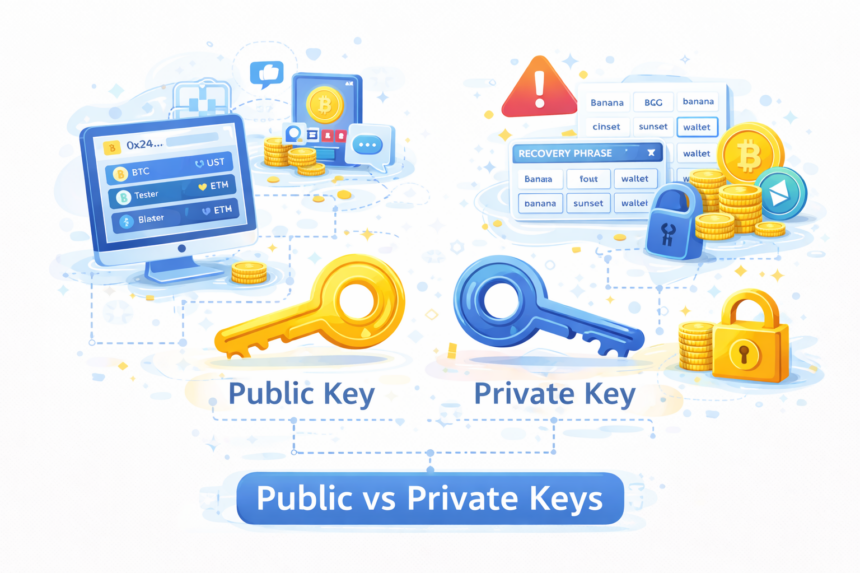
In cryptocurrency, security is everything. Public and private keys are the core technology that keeps your funds safe on the blockchain.
If you understand how these keys work, you understand how crypto ownership truly works.
In simple words:
Public keys receive crypto.
Private keys control crypto.
What Is a Public Key?
A public key is a cryptographic address used to receive cryptocurrency.
Key features of public keys:
- Can be shared with anyone
- Used to receive funds
- Generated from the private key
- Visible on the blockchain
Think of a public key like your bank account number people need it to send you money.
What Is a Private Key?
A private key is a secret cryptographic code that authorizes transactions.
Key features of private keys:
- Must be kept secret
- Proves ownership of crypto
- Used to sign transactions
- Gives full control over funds
Your private key is like your ATM PIN + signature combined.
If someone gets your private key, they can steal your crypto.
How Public and Private Keys Work Together
Public and private keys work as a pair using cryptographic algorithms.
Simple explanation:
- A wallet generates a private key
- A public key is derived from it
- Funds are sent to the public key
- Private key signs transactions
- Blockchain verifies ownership
This system allows secure transactions without revealing private information.
Public vs Private Keys (Side-by-Side Comparison)
| Feature | Public Key | Private Key |
| Purpose | Receive crypto | Spend crypto |
| Shareable | Yes | No |
| Visibility | Public | Secret |
| Control funds | ❌ No | ✅ Yes |
| Security risk | Low | High if leaked |
Why Private Keys Are So Important
Your private key:
- Proves ownership
- Controls wallet access
- Signs every transaction
- Enables DeFi and Web3 access
This is why the saying exists:
“Not your keys, not your crypto.”
What Is a Seed Phrase?
A seed phrase (recovery phrase) is a human-readable version of your private key.
Seed phrase facts:
- Usually 12 or 24 words
- Can restore wallet access
- Must be stored offline
- Losing it means losing funds
Never store your seed phrase online.
How Wallets Manage Public and Private Keys
Crypto wallets:
- Generate keys automatically
- Store private keys securely
- Display public addresses for receiving funds
Wallets do not store crypto they store keys.
Public and Private Keys in DeFi
In DeFi:
- Wallet connects using public key
- Transactions signed using private key
- No middlemen involved
Your keys give you full control over your funds.
Common Mistakes to Avoid
- Sharing private keys
- Storing seed phrases online
- Using fake wallet apps
- Clicking phishing links
Security depends on user responsibility.
Are Public Keys Safe to Share?
Yes. Public keys are designed to be shared.
However:
- Do not reuse addresses unnecessarily
- Avoid posting them publicly if privacy matters
Public vs Private Keys vs Wallets
| Term | What It Does |
| Public Key | Receives crypto |
| Private Key | Controls crypto |
| Wallet | Manages keys |
Real-World Example
- You share your public key to receive BTC
- Sender sends BTC to that address
- You use your private key to spend BTC
- Blockchain verifies transaction
Final Thoughts
Public and private keys are the foundation of crypto security. Understanding the difference helps you:
- Protect your assets
- Avoid scams
- Use wallets confidently
- Participate safely in DeFi and Web3
Remember:
Share your public key freely.
Protect your private key at all costs.
Disclaimer
Disclaimer:
This article is for educational purposes only and does not constitute financial or security advice. Cryptocurrency usage involves risk. Always secure your private keys and conduct your own research (DYOR).