
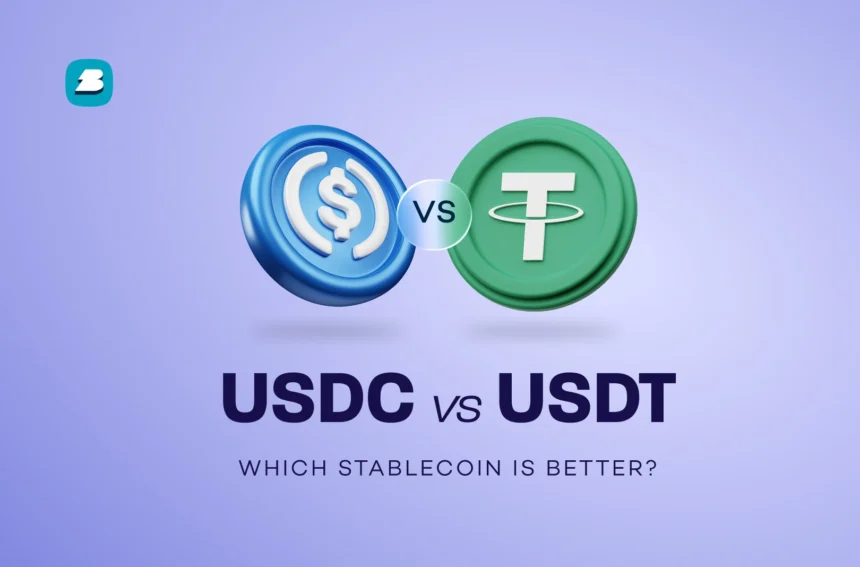
Stablecoins are the backbone of the crypto ecosystem, and USDT (Tether) and USDC (USD Coin) dominate the market.
If you trade crypto, use DeFi, or store stable value on-chain, choosing between USDT vs USDC directly affects:
- Safety
- Liquidity
- Regulatory exposure
- DeFi compatibility
This guide gives a clear, honest comparison so you can decide which stablecoin fits your needs.
What Is USDT (Tether)?
USDT (Tether) is the largest stablecoin in the world by market capitalization. It is pegged 1:1 to the US Dollar and is widely used for trading and transfers.
Key Characteristics of USDT
- Highest liquidity in crypto markets
- Supported on many blockchains (Ethereum, Tron, BNB Chain, Polygon)
- Preferred trading pair on most exchanges
- Fast and low-cost transfers on Tron (TRC-20)
Main Use Cases
- Crypto trading
- Arbitrage
- Transfers between exchanges
- Liquidity in DeFi
What Is USDC (USD Coin)?
USDC (USD Coin) is a US dollar–backed stablecoin known for high transparency and regulatory compliance.
Key Characteristics of USDC
- Fully backed by cash & short-term US treasuries
- Regular third-party audits
- Strong compliance standards
- Widely used in DeFi and institutional finance
Main Use Cases
- DeFi lending & borrowing
- Institutional settlements
- Long-term stable storage
- Regulated crypto products
USDT vs USDC: Side-by-Side Comparison
| Feature | USDT | USDC |
| Issuer | Tether | Circle |
| Transparency | Medium | High |
| Audits | Limited | Regular |
| Market Liquidity | Very High | High |
| Exchange Support | Universal | Very High |
| DeFi Adoption | High | Very High |
| Regulation Focus | Low–Medium | High |
| Institutional Use | Medium | Very High |
Which Is Safer: USDT or USDC?
USDC Safety
USDC is generally considered safer for long-term holding because:
- Clear reserve disclosures
- Strong regulatory alignment
- Transparent audits
USDT Safety
USDT is safe for active usage, but:
- Less transparent reserves
- More regulatory uncertainty
- Historically controversial (though still widely trusted in markets)
Verdict:
- USDC = safer & cleaner
- USDT = more liquid & flexible
USDT vs USDC for Trading
USDT is better for trading because:
- Highest trading volume
- Lowest slippage
- Most trading pairs
Most crypto traders prefer USDT for speed and liquidity.
USDT vs USDC for DeFi
USDC dominates DeFi due to:
- Protocol trust
- Lower regulatory risk
- Better integration with lending platforms
USDC is preferred for:
- Lending
- Yield farming
- Vault strategies
Fees & Transfer Costs
- USDT (TRC-20): Very low fees
- USDC (Ethereum): Higher gas fees
- Both on Layer-2s: Low cost
For cheap transfers, USDT on Tron is usually the cheapest.
Regulatory Risk Comparison
| Factor | USDT | USDC |
| Regulatory Alignment | Lower | Higher |
| Government Scrutiny | Higher | Lower |
| Institutional Acceptance | Medium | High |
If regulations tighten, USDC is better positioned long-term.
Which Stablecoin Should You Choose?
Choose USDT if:
- You trade frequently
- You need high liquidity
- You want low-fee transfers
- You move funds between exchanges
Choose USDC if:
- You use DeFi
- You want transparency
- You hold stablecoins long-term
- You care about regulation
Best strategy:
Many users hold both USDT and USDC for flexibility.
Frequently Asked Questions (FAQs)
Is USDT riskier than USDC?
Yes, due to lower transparency, but it remains highly liquid and widely used.
Can USDT or USDC lose their peg?
Rare, but possible during extreme market stress. USDC historically recovers faster.
Which stablecoin is better for beginners?
USDC, due to simplicity and transparency.
Final Verdict: USDT vs USDC
There is no single “best” stablecoin — only the best one for your use case.
- USDT excels in trading and liquidity
- USDC excels in safety, DeFi, and regulation
Understanding the difference helps you reduce risk and optimize returns.
Disclaimer
Disclaimer:
This content is for educational purposes only and does not constitute financial advice. Stablecoins carry regulatory and platform risks. Always do your own research (DYOR).