
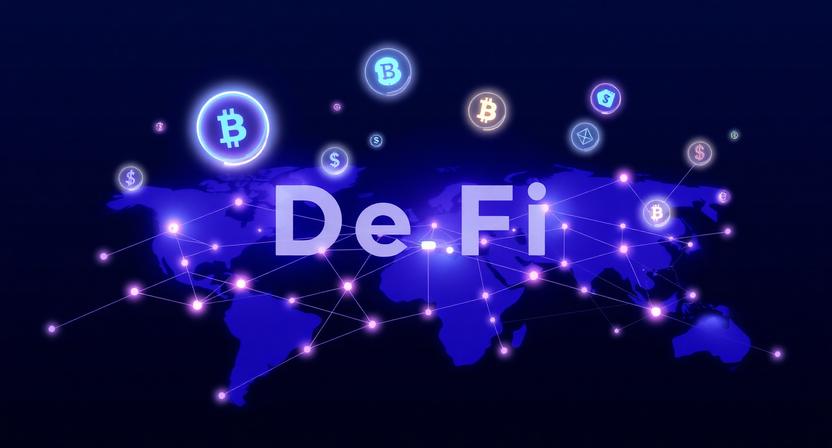
Decentralized Finance, commonly known as DeFi, is one of the most powerful innovations in the blockchain world. It removes banks, brokers, and middlemen and replaces them with blockchain-based smart contracts. This allows anyone to trade, borrow, lend, invest, save, and earn crypto without relying on centralized institutions.
Terms like DeFi crypto, DeFi protocol, DeFi wallet, DeFi examples, how to invest in DeFi, and DeFi vs Crypto all relate to the same ecosystem. This guide explains everything thoroughly and professionally.
What Is DeFi
DeFi is a blockchain-powered financial system that operates without banks or centralized intermediaries. Instead of depending on institutions, DeFi uses smart contracts to execute financial activities automatically.
DeFi enables:
- Trading digital assets
- Borrowing and lending
- Earning interest
- Investing in liquidity pools
- Accessing decentralized exchanges
- Managing assets independently
Anyone with a crypto wallet can interact with DeFi without permission, paperwork, or KYC on most platforms.
DeFi in Blockchain
DeFi exists because of blockchain technology. A blockchain is a decentralized digital ledger that records transactions transparently and permanently.
In the DeFi ecosystem:
- The blockchain acts as the network
- Smart contracts enforce all rules
- Crypto tokens are used as assets
- Users interact directly with applications without middlemen
This structure makes DeFi transparent, borderless, and always accessible.
DeFi Protocols Explained
A DeFi protocol is a blockchain-based application designed for specific financial functions. These protocols run on smart contracts and automate tasks normally performed by banks.
Examples include:
- Uniswap for token swapping
- Aave and Compound for lending and borrowing
- MakerDAO for creating stablecoins
- Curve for stablecoin trading
- PancakeSwap for liquidity pools
Each protocol has its own token, rules, and utility.
DeFi Crypto Explained
A DeFi crypto is a token used within a DeFi protocol. These tokens may provide:
- Governance rights
- Rewards
- Staking benefits
- Voting power
- Utility within the platform
Examples include UNI, AAVE, COMP, CRV, MKR, CAKE, and others.
DeFi Wallet Explained
A DeFi wallet is a non-custodial wallet that gives users full control over their digital assets. Unlike centralized exchange wallets, DeFi wallets allow users to interact directly with decentralized applications.
Popular DeFi wallets include:
- MetaMask
- Trust Wallet
- Coinbase Wallet
- Phantom
These wallets connect directly to dApps and support swapping, staking, and other DeFi activities.
DeFi Trading Explained
DeFi trading refers to trading digital assets using decentralized exchanges instead of centralized platforms. This allows users to trade directly from their wallets.
Decentralized exchanges such as Uniswap, SushiSwap, and PancakeSwap enable trustless token swaps without sign-ups or KYC.
Key advantages include:
- Full control of assets
- No bank or government intervention
- Access to a wide range of tokens
- No withdrawal limits
Examples of DeFi
The DeFi ecosystem includes many categories:
- Decentralized exchanges (DEXs)
- Lending and borrowing platforms
- Stablecoins and synthetic assets
- Yield farming platforms
- Staking platforms
- Automated market makers
- Cross-chain bridges
These applications create an open, permissionless financial system.
How to Invest in DeFi
Beginners can invest in DeFi through several methods such as:
- Lending assets on platforms to earn interest
- Providing liquidity to pools
- Staking tokens for rewards
- Buying and holding DeFi tokens
- Using DeFi yield optimization tools
These methods involve risk, so it is essential to research and start with secure platforms.
How DeFi Makes Money
DeFi platforms generate revenue through:
- Trading fees
- Borrowing interest
- Liquidity pool fees
- Protocol charges
- Staking rewards
Users earn by providing liquidity, lending crypto, staking tokens, or participating in yield farming initiatives.
DeFi vs Crypto
- DeFi and crypto are related but not the same.
- Crypto refers to digital currencies such as Bitcoin or Ethereum.
- DeFi refers to a blockchain ecosystem that enables financial activities using crypto assets.
- Crypto is the asset.
- DeFi is the financial system built on top of blockchain assets.
Is DeFi Legal in India
DeFi usage is allowed in India. There is no law banning DeFi. However, the government taxes crypto earnings at 30 percent and applies a 1 percent TDS on trades.
DeFi activities such as lending, staking, and yield farming are permitted, but users must comply with taxation requirements and understand the risks.
Is DeFi a Good Investment
DeFi has high potential rewards but also higher risks than traditional finance. It can be a strong opportunity for investors who understand smart contracts, liquidity pools, and token economics.
DeFi may not be ideal for absolute beginners. Proper research, secure wallets, and risk management are essential.
Conclusion
DeFi is reshaping global finance by offering open, transparent, and decentralized systems that anyone can use. It replaces banks with smart contracts and gives users full control over their assets. While DeFi offers new opportunities to earn, trade, and invest, it also comes with risks and requires careful understanding before participation. Starting with small amounts and proven platforms is the safest approach.
Disclaimer
This content is for educational purposes only and does not constitute financial, investment, legal, or tax advice. Cryptocurrency involves risk, and readers should conduct independent research or consult a qualified professional before making decisions.