
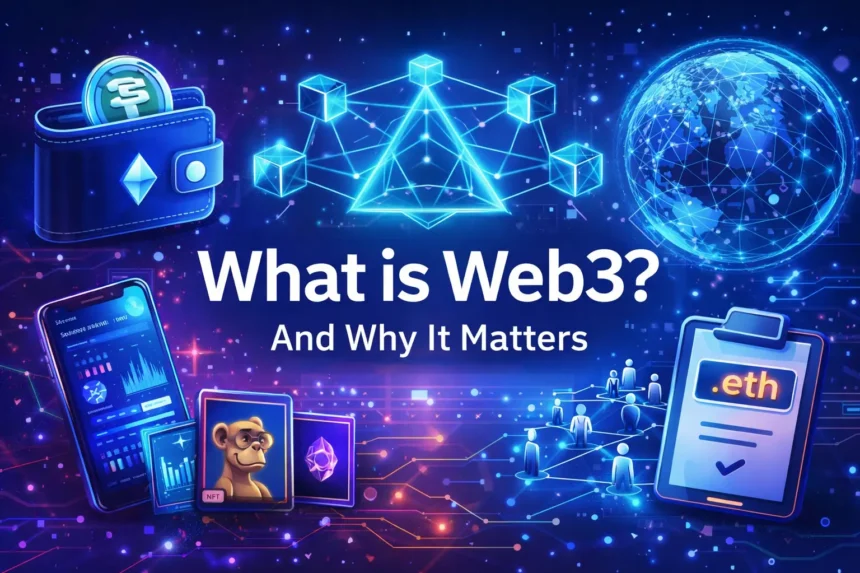
Web3 is the next evolution of the internet that is decentralized, user-owned, and powered by blockchain technology.
In simple terms:
Web3 gives users control over their data, identity, and digital assets instead of centralized companies. Unlike today’s internet (Web2), Web3 removes middlemen and allows peer-to-peer interactions using smart contracts.
Evolution of the Internet: Web1 → Web2 → Web3
Understanding Web3 is easier when you see how the internet evolved.
Web1 – Read Only (1990–2005)
- Static websites
- No interaction
- Users only consumed content
Example:
Early news websites where you could only read articles.
Web2 – Read & Write (2005–Present)
- Social media
- User-generated content
- Centralized platforms control data
Examples:
- Facebook owns your posts
- YouTube controls monetization
- Google stores your data
💡 You use the platform, but you don’t own your data.
Web3 – Read, Write & Own (Future of Internet)
- Decentralized apps (dApps)
- Blockchain-based ownership
- Users control assets and identity
Example:
You own your wallet, tokens, NFTs, and identity—no company can take them away.
How Does Web3 Work?
Web3 is built on blockchain technology, which enables:
- Decentralization
- Transparency
- Security
- Trustless transactions
Core Technologies Behind Web3
1. Blockchain
A public, immutable ledger that records transactions.
Example: Ethereum blockchain records DeFi transactions.
2. Smart Contracts
Self-executing programs that run automatically when conditions are met.
Example:
A loan smart contract releases funds once collateral is deposited.
3. Crypto Wallets
Wallets act as your Web3 login and bank account.
Examples:
- MetaMask
- Trust Wallet
No email or password required.
What Is DeFi in Web3? (With Example)
DeFi (Decentralized Finance) is one of the biggest applications of Web3.
Traditional Banking vs DeFi
| Feature | Traditional Bank | DeFi |
| Control | Bank | User |
| Access | Limited | Global |
| Transparency | Low | High |
| Intermediaries | Yes | No |
DeFi Example:
You lend USDT on a DeFi platform:
- Smart contract holds funds
- Interest earned automatically
- No bank approval required
What Is Digital Ownership in Web3?
In Web3, you truly own your digital assets.
Examples of Digital Ownership
- Cryptocurrency: You own tokens in your wallet
- NFTs: You own digital art or collectibles
- Domains: Blockchain-based domains (like ENS)
💡 Even if a platform shuts down, your assets remain safe on the blockchain.
Real-World Web3 Examples
1. Web3 Payments
Send money globally in minutes without banks.
Example:
Sending USDT from India to the US instantly.
2. NFTs (Non-Fungible Tokens)
Unique digital assets with ownership proof.
Example:
Artists selling digital art directly to buyers.
3. DAOs (Decentralized Autonomous Organizations)
Community-run organizations without CEOs.
Example:
Token holders vote on project decisions.
4. Web3 Gaming
Players own in-game assets.
Example:
Items earned in a game can be sold outside the game.
Why Web3 Matters
Web3 solves major problems of Web2:
Key Benefits of Web3
- User-owned data
- Censorship resistance
- Financial inclusion
- Global access
- Trustless systems
- Transparent transactions
Web3 empowers users instead of corporations.
Web2 vs Web3 Comparison
| Feature | Web2 | Web3 |
| Data Ownership | Companies | Users |
| Identity | Email/password | Wallet |
| Payments | Banks | Crypto |
| Control | Centralized | Decentralized |
Is Web3 Safe?
Web3 is secure but user responsibility is critical.
Risks:
- Scams
- Fake smart contracts
- Lost private keys
Safety Tips:
- Never share seed phrases
- Use hardware wallets for large funds
- Verify platforms before connecting wallet
Web3 and the Future of the Internet
Web3 is expected to transform:
- Finance (DeFi)
- Social media
- Gaming
- Real estate
- Identity systems
As adoption grows, Web3 will redefine how we interact online.
Frequently Asked Questions (FAQs)
Is Web3 only about crypto?
No. Crypto is just one part of Web3. Web3 includes identity, data ownership, NFTs, DAOs, and decentralized apps.
Do I need coding to use Web3?
No. Most Web3 apps are user-friendly and require only a wallet.
Is Web3 legal in India?
Web3 technology is legal, but crypto-related regulations and taxation apply. Always follow local laws.
Final Thoughts
Web3 is not just a new technology it’s a new philosophy of the internet. By removing intermediaries and giving users control, Web3 is shaping a more open, transparent, and fair digital future.
If you understand Web3 today, you’re preparing for the internet of tomorrow.
Disclaimer
Disclaimer:
This article is for educational purposes only and does not constitute financial, investment, or legal advice. Web3 technologies involve risk. Always do your own research (DYOR) and comply with applicable laws and regulations.